Do we know the first people to figure out how to make wool from sheep, and how did they do it?

We know very little about the history of wool production, in large part because wool is a biodegradable substance which is preserved only in unusual circumstances.

What appears to be clear is that humans began wearing clothing between 100,000 and 500,000 years ago. These would probably have been skins initially. The human body louse diverged from the human head louse about 170,000 years ago, indicating that the wearing of clothing was pretty well established by then (the body louse could not have evolved on naked, near hairless bodies). This predates our ancestors’ exodus from Africa, but does not preclude our having picked up clothing – and infestations – from previous exoduses. Sewing, probably using animal sinew or flax[1], is at least 50,000 years old, and may well have been invented by the Denisovans[2] (Homo denisova/altai) rather than our human ancestors – the oldest complete sewing needles were found in the Denisova Cave in Siberia.

Sheep were domesticated between 9,000 and 11,000 years ago, probably for meat, skins and milk, as these primitive animals were more hairy than woolly. Hair helped slick off rain, whereas the wool – originally an undercoat – kept the animal warm. There is some archaeological evidence that sheep were beginning to be bred for wool in ancient Iran, around 6,000 years ago. Again, this may have been an attempt to breed for warm skins rather than for the wool. These primitive sheep, like many preserved primitive breeds today such as the Scottish Soay, shed their woollen undercoat in warmer weather. The wool would have come off on briars and against trees the sheep scratched themselves on, and could be pulled off (‘rooed’) by their caretakers.


So far, we have domestic sheep and sewing. At this point, I’m going to abandon facts and venture into speculation, because facts are pretty thin on the ground.

I think that it is almost certain that the first fabric made from wool was probably some form of felt. There’s two possible ways I think this could have happened:

  1. shed wool rolls about the ground, getting wet and scrabbled together into small felted balls;
  2. people take this shed wool and push it into their primitive boots for comfort. Through sweat and being walked on, the wool felts itself into a sock-like shape;

At some point, some clever-clogs (or socks) thinks “I wonder if I can do this deliberately?”, and voilà!, so to speak.

Now, felt is a pretty handy thing, you can make it in sheets, then cut it to shape and sew the pieces together to make a pretty decent winter garment – but it is thick, and a bit stiff, so it’s unsuitable for warm weather or for active wear.

Fragments of earliest-known surviving textile; found at Çatalhöyük; 6th millennium BC; Museum of Anatolian Civilizations, Ankara, Turkey[3]

The next stage, I think, would be weaving. Weaving has certainly been around for around 6,000 years, and reached an impressively high standard of 540 threads per inch in Ancient Egypt[4]. However, before weaving, we need thread: and this is where 60,000 years of sewing comes in. Originally, sewing would have used naturally occurring short lengths of fibre, like animal sinews or flax xylems, perhaps even hair from those not-so-woolly primitive sheep. The hair, or kemp might be strong enough to use, but individual strands of wool are microns thick – far too fine to be of use. We now have the technology (sewing needles), but how do we get thread from wool?

Boredom.

I believe the next stage is a quantum leap from puffs of shed wool to thread, by means of boredom. Tending sheep is a dull business, even with plenty of Neolithic predators about. It’s hours, days, weeks of sitting around watching the woolly buggers eat, baa, and occasionally boink. I think some bored shepherd boy, or probably many bored shepherd boys and girls of all ages, in different places over thousands of years, got in the habit of picking up a piece of shed wool and twiddling with it. In the course of twiddling, they accidentally pulled some strands of wool together and twisted it – and, as wool tends to do, those strands stayed together, and just kept on coming, until the bundle of shed wool disappeared. I’ve done this with a ball of cotton wool while sitting bored in an A&E, waiting for an X-ray. It can be done with little to no attention or intention.

So now we have wool thread. It gets used for sewing. Then, someone has the bright idea of weaving with wool thread. And this happened between 6,000 and 3,500 years ago: the oldest woollen cloth dates from 1,500 BCE[5], amongst the belongings of the Bredmose Woman bog-body[6]. Only 500 to 1,000 years afterwards, Huldremose Woman died wearing glowing woollen plaids[7]:

But that’s just weaving. Where does knitting and crochet and lacemaking and tatting et al. come in? Ah, but that is a different question…

Footnotes

[1] Archaeologists Discover Oldest-known Fiber Materials Used By Early Humans

[2] World’s oldest needle found in Siberian cave that stitches together human history

[3] File:Museum of Anatolian Civilizations016.jpg

[4] How linen is made

[5] The Bronze Age – National Museum of Denmark

[6] FiberWild! A Unique Knit Shop

[7] The Huldremose woman’s clothes – National Museum of Denmark

Originally appeared on Quora.

What are the potential problems with having a sheep as a pet in a home with a fenced backyard?

As others have mentioned, keeping “a” sheep is unkind to the sheep. They need companionship.

The second issue is the backyard. To me, a backyard is asphalt, concrete, brick, flagstones, something like that. Not a field or lawn:

This would be like keeping a sheep in a shed all the time. That means carrying fodder and water to the sheep, and shovelling its manure away – probably through the house. This is acceptable in particularly bad winters for lowland, warm-climate sheep, but many breeds are perfectly adapted to outdoor living all year round. Keeping them “indoors” is cruel.

The type of field a sheep lives in is important. They are not naturally grass-eaters. They prefer ‘forbs’, that is flowering plants – what would be considered weeds in grassland. They’re very useful for clearing grass of forbs, and will only eat grass when the forbs are gone. Smart farmers round my way put sheep in their meadows in the spring to eat the forbs, moving them on before the grass comes in for silage- and hay-making. If your backyard is a grass lawn, consider seeding it with clover and other meadow weeds before investing in sheep.

Contrary to popular opinion, sheep are lively and curious creatures. They enjoy exploring their environment, and can be quite athletic. This means they should have a varied environment in which to live: objects to climb and jump on or off, baskets of hay suspended from trees, scratching posts, hidey-holes, etc. They should also have access to free running water, and a shed: not necessarily anything too elaborate, just somewhere they can retreat to in the heat of the day, or heavy rain or snow. It doesn’t even need to have four walls or a shuttable door, as their combined body heat should keep them adequately warm.

They also require a degree of veterinary care. Worming, drenches, hoof inspection, etc. This may mean you need a ‘crush’, a narrow passage that the sheep cannot turn round in, where treatments and inspections can be conducted. Some farmers build their own semi-permanent structures, some hire them.

Home-made crush, using gates.

Mobile crush-for-hire.

And unless you take on a primitive breed, you’ll need to shear them! Many government agricultural departments offer shearing courses for those interested – and courses in animal care generally, which are well worth looking into. Alternatively, you can contact a local sheep farmer who may be prepared to shear your sheep with their own for a fee, or they could put you in touch with a shearer.

Originally appeared on Quora.

Is it better to wear recycled wool and recycled silk as opposed to conventional wool and silk?

Either is fine. However, as both are biodegradable, you should always check the quality of the recycled item. Recycled wool that is beyond wearing is used in some places as house insulation, and at least one company processes old wool fibres into a sheeted fabric for clothing.

Both are natural products with little environmental impact, unlike, for example, cotton, which requires processing and requires dyes that are environmentally damaging. Silk and wool, like all animal fibres, can be dyed with vinegar and safe pigments such as those in food colouring. The processing is usually simple water and soap, or water alone: ‘fermented’ sheep sweat and grease, known as a suint scour, is an excellent method for cleaning fleece, and is itself recyclable because every fleece scoured makes the suint bath stronger*. Alternately, the sheep grease makes a wonderful moisturiser, either neat or cooked. It can even be used for making soaps, which is particularly good for washing your wool garments and for shaving. The ‘glue’ removed from silk cocoons, known as sericin, has been used for medical suturing and as an infection-resistant wound coagulant; and in cosmetics as a moisturiser.

Silk is upsetting to some people, as the silkworm is usually killed to preserved the integrity of the single strand of silk from which the cocoon is formed. However, there is a form of silk known as ‘tussah’, which uses the cocoon after the silkworm has emerged. This is often considered a lower-quality form of silk, but it’s exactly the same material – just woven from broken cocoon strands.


* – Don’t try this at home, unless you live in the wilds. It HOOOONKS!

Originally appeared on Quora.

Do wild sheep exist anymore?

Oh yes.

The St Kilda archipelago was evacuated in 1930, leaving two varieties of primitive sheep behind. A small Neolithic breed on Soay island, and an Iron Age type on the island of Boreray, they became feral in the absence of humans, and have only recently been re-introduced as domestic sheep out of concern for their rarity. Both are extremely low-maintenance: the naturally shed their fleece, lamb easily, and are immune (or at least not prone) to many of the common diseases of domestic sheep, such as foot rot and flystrike. They are becoming very popular with small-holders and people looking for cheap lawnmowers.

Boreray ram, standing approximately 55cm, with the usual pale cream fleece (other colours are rare). Originally raised for mutton and wool, its fleece is in demand from fibre crafters despite often being rather coarse.

From Pinterest: Soay sheep in the dark brown, light brown, and blonde colours. Black is also common, white is rare, and some piebalds occur too. They can reach 60cm at the shoulder. The fleece is very soft, but quite short.

On another Scottish island, North Ronaldsay in the Orkneys, lives another feral sheep from the Iron Age: the seaweed eating North Ronaldsay. I’m told the meat is orgasmically delicious, because of this diet, but have not the funds to investigate. They have probably the biggest range of natural colours, from a pure white, creamy yellow, light and dark shades of grey and brown, black,

From Country Life. If my Photoshop skills were any good (and I could afford Photoshop), I’d change the seaweed to intestines and use this pic for the cover of my book about zombie sheep of the apocalypse…

and, unusually, a red (right):

At Carlinskerry B&B, Orkney. North Ronaldsay sheep are only 40cm tall, and OMG THEY’RE SO DINKY I’LL TAKE A DOZEN*!!!


These are the wild sheep I’m most familiar with. There are others, but most are hair sheep so I find them less interesting. These sheep in goats’ clothing include the American Bighorn, the Siberian Snow Sheep, the Argali, the UrialDall sheep, the Mouflon, and their numerous subspecies.


* – When I retire by the sea. They eat very little apart from seaweed.

Originally appeared on Quora.

Which is a better wool, Quiviut or Vicuna?

Neither. Technically, wool is only produced by domesticated sheep.

Qiviut is the undercoat of the Arctic muskox, a relative of sheep and goats (not cattle, despite being called an ‘ox’). It is shed naturally in spring. Only about half of the shed or less is suitable for spinning into yarn. The fibre itself is very fine (around 18 microns), warmer and stronger than wool, non-itchy, and – like hair – does not felt.

The vicuña is a wild South American camelid, related to the alpaca and llama. Vicuña do not do well in captivity, so they are rounded up and sheared every 2–3 years. The amount of fibre is tiny – only 500g or so. Unlike qiviut, vicuña doesn’t take dye well, so it’s only available in its natural golden-brown shade. Like alpaca, the fibre is hollow, and its fine scales allow it to interlock to retain warmth. Each fibre is 8–13 microns thick, making it one of the finest known – only angora hair, from angora rabbits, is of a similar fineness.

FLOOOOOFFFFFF.

The main difference is that muskoxen can be farmed, but vicuña can’t. As a result, qiviut is cheaper. Both, however, are high-end luxury fibres.

Originally appeared on Quora.

How much does a sheep cost?

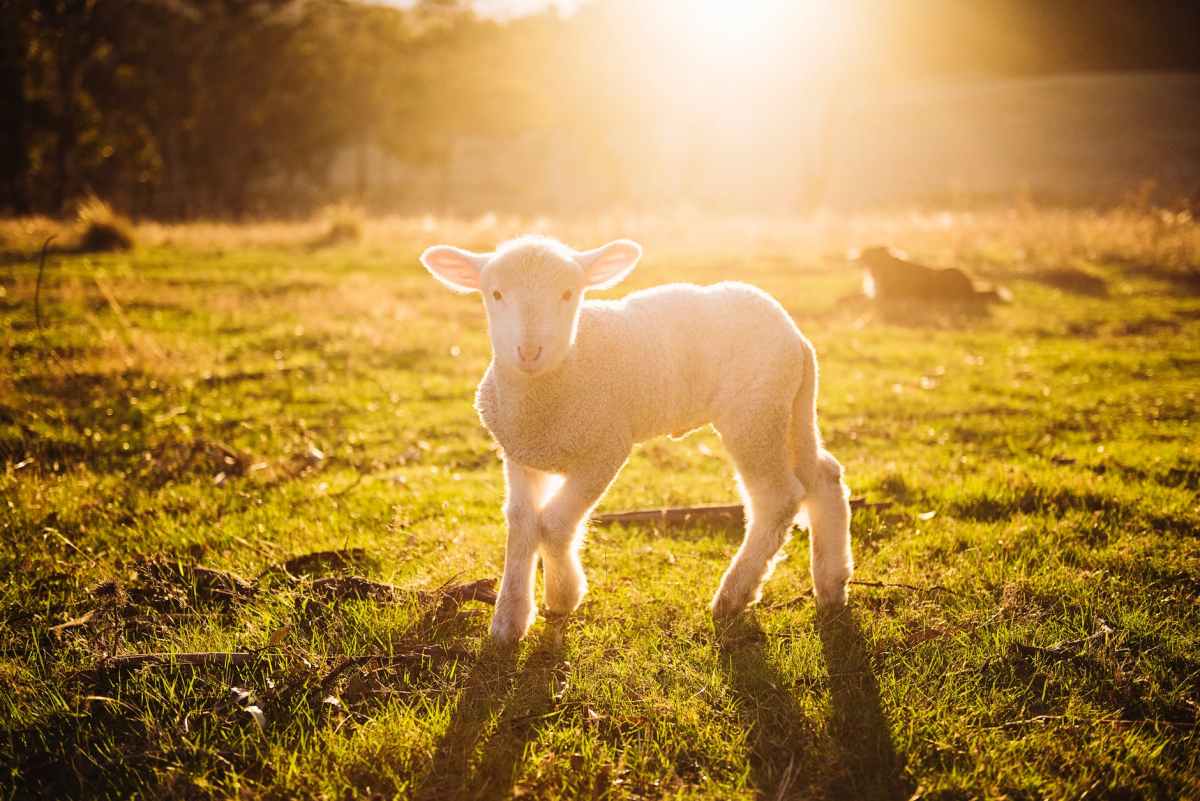
If I wasn’t fussy, I could pick up a pet lamb for free. Locally, too.

After that, it depends on breed, sex, ‘intactness’, age, etc. I’ve seen pedigree Jacobs starting around £150,

and Valais Blacknose over £1,500:

Critically endangered Boreray for as little as £90:

And small flocks of rare Soay (half a dozen sheep including a ram) for under £100 all in:

You may as well ask how long is a piece of wool…

What happens when you give a sheep whiskey and a bag of marshmallows?

Cheap date, with possibility of oral.

Originally appeared on Quora.

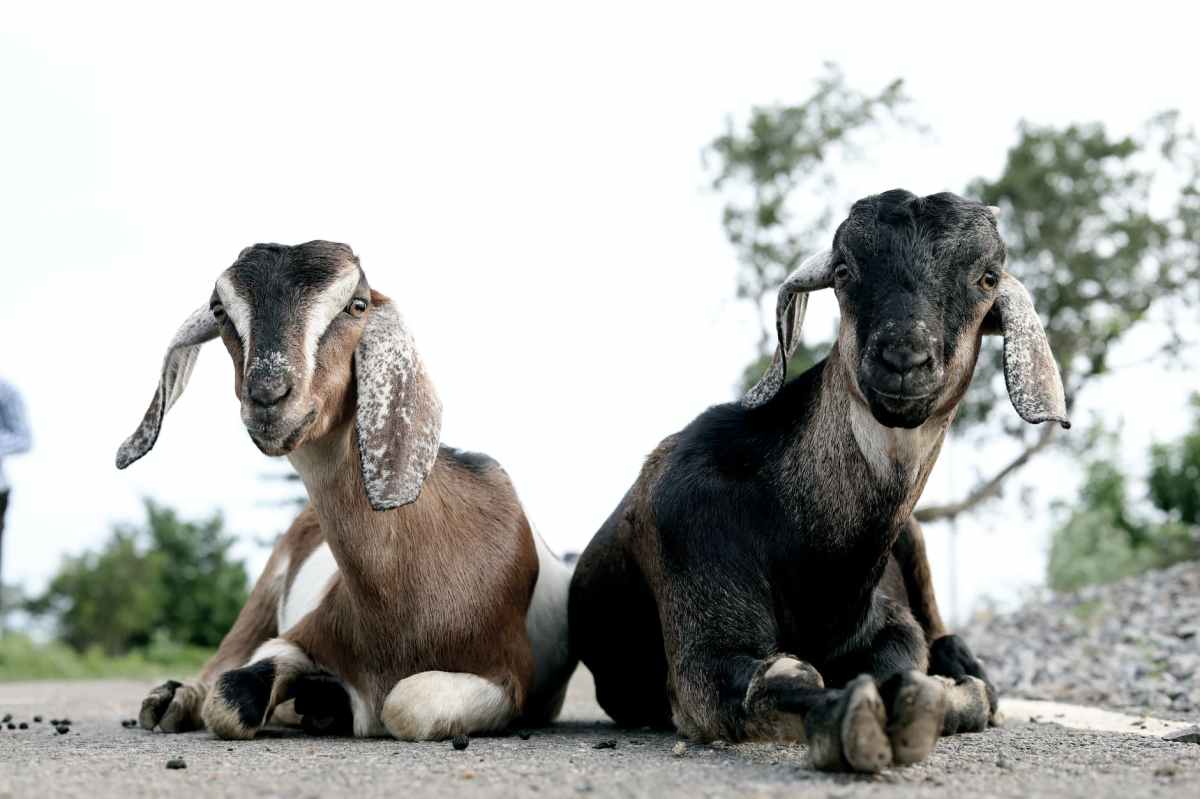
Which is the better pet: a goat or a sheep, and why?

Neither.

They shouldn’t be pets, and sheep in particular are better served in flocks. Goats too, but I’ve known some goats kept singly or in pairs that don’t suffer.

Personally, I prefer sheep, because, wool. Also, regularly handled, they’re tremendously affectionate, like dogs:

Goats eat and wreck everything and will knock you over as soon as look at you.

Originally appeared on Quora.

Why do sheep pee whenever a human walks by?

Because humans don’t notice sheep peeing when they’re not walking by.

Originally appeared on Quora.

What does it feel like for a sheep after it gets sheared?

I suffer terribly with the cold. From September/October to May/June/July, I am bundled up in thick layers of thermal underwear, light under-layer, jumper and corduroy or tweed trousers, two pairs of socks, felted slippers/fur-lined boots, and often a hat, shawl/blanket and glove combo on top. That’s me sitting in front of the fire. There’s more insulation needed to get me out of the house.

However, for a few days between May/June/July and September/October, it is toasty and warm outside. On those days, I skip outside in a single layer of cotton or linen. Barefoot! Bare-headed! I feel so light that I might float away like a dandelion clock, young and giddy. I am occasionally tempted to dance, but I keep that to my back garden for fear of scaring the neighbours and livestock.

Thus it is with our woolly friends. They are denuded of their heavy, uncomfortable winter attire, and frolic sky-clad in the sun:

Shearing is usually conducted in spring. Sometimes, the weather is still a little chilly, so shepherds will house shorn sheep or give them little coats to wear while they adjust:

NB: in case you don’t get it, the lady speaking was being sarcastic about the cruelty of shearing.


Shearing is expensive. An experienced UK shearer can earn around £400 (€450/US$550/AU$730) a day: £50 per hour, shearing 25–30 sheep an hour. That’s a massive outlay for a farmer who may have had next to no regular income since the previous autumn. You don’t waste that money shearing an animal for slaughter. Far better to send the sheep unshorn for slaughter, and possibly have a sheepskin to sell to the tanning industry. I’m not well up on the prices realised by untanned sheepskin, but after processing a sheepskin can command upwards of £100 each.

In the UK, the Wool Marketing Board is the only buyer of fleeces from most herds*. They will pay as little as £0.50 per fleece – a fleece that cost around £2 to shear. There is no incentive to farm for fleece: some have been known to throw it away.

OTOH, there’s no incentive to mistreat animals if you do farm for fleece. An ill-treated animal will be skittish and unmanageable at the next shearing – and will probably recognise a bad shearer again, too.


* – Hobby farms with up to 4 sheep, and some rarebreed protection farms are exempt, as are Shetland farms. Some hobby farmers and rarebreed farmers sell their fleeces to handspinners. Depending on the breed, in the grease prices can be anywhere from £5 to £30 per fleece, while scoured fleece runs from about £10 upwards. Fully prepped tops, ready for spinning, can be anywhere from £4 per 100g to WHAT THE EVER LIVING FUCK!?!?!

(Actually, Hilltop Cloud isn’t that expensive – it’s just where I did my most recent fibre purchase. Try vicuna.)