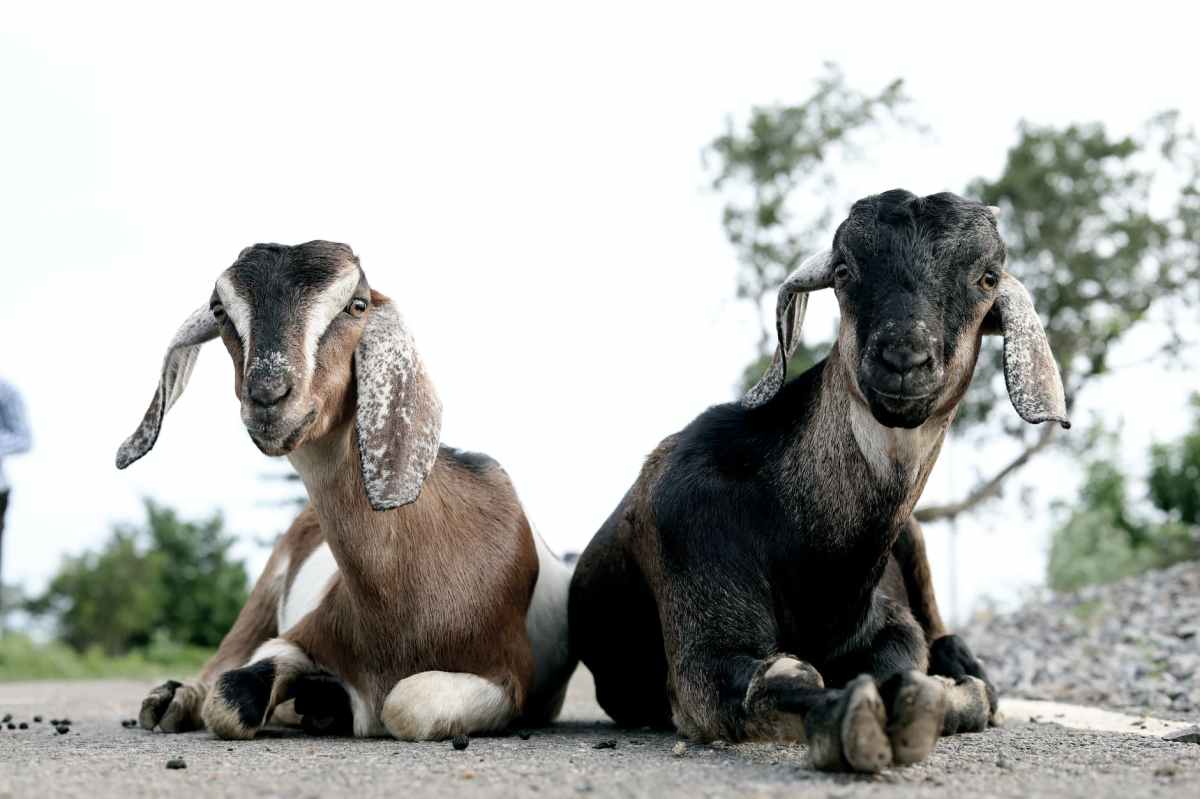
They shouldn’t be pets, and sheep in particular are better served in flocks. Goats too, but I’ve known some goats kept singly or in pairs that don’t suffer.
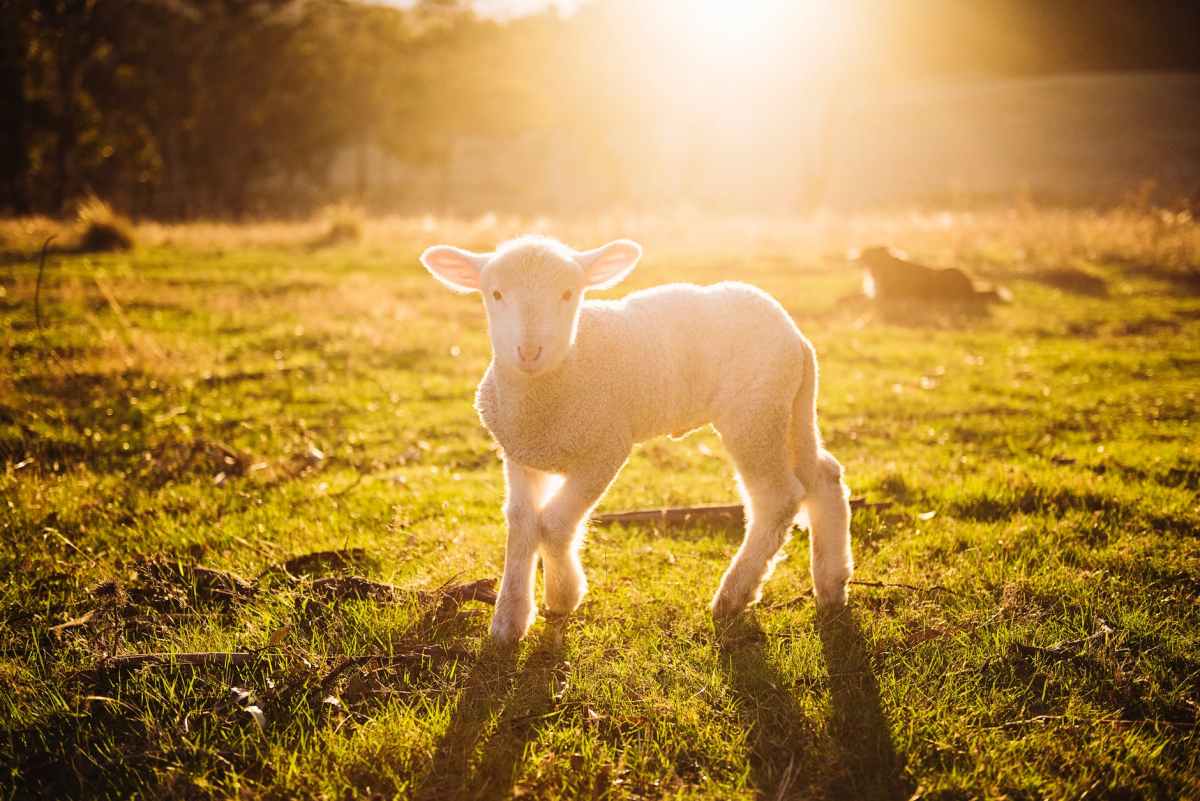
Personally, I prefer sheep, because, wool. Also, regularly handled, they’re tremendously affectionate, like dogs:
Goats eat and wreck everything and will knock you over as soon as look at you.
I suffer terribly with the cold. From September/October to May/June/July, I am bundled up in thick layers of thermal underwear, light under-layer, jumper and corduroy or tweed trousers, two pairs of socks, felted slippers/fur-lined boots, and often a hat, shawl/blanket and glove combo on top. That’s me sitting in front of the fire. There’s more insulation needed to get me out of the house.
However, for a few days between May/June/July and September/October, it is toasty and warm outside. On those days, I skip outside in a single layer of cotton or linen. Barefoot! Bare-headed! I feel so light that I might float away like a dandelion clock, young and giddy. I am occasionally tempted to dance, but I keep that to my back garden for fear of scaring the neighbours and livestock.
Thus it is with our woolly friends. They are denuded of their heavy, uncomfortable winter attire, and frolic sky-clad in the sun:
Shearing is usually conducted in spring. Sometimes, the weather is still a little chilly, so shepherds will house shorn sheep or give them little coats to wear while they adjust:
NB: in case you don’t get it, the lady speaking was being sarcastic about the cruelty of shearing.
Shearing is expensive. An experienced UK shearer can earn around £400 (€450/US$550/AU$730) a day: £50 per hour, shearing 25–30 sheep an hour. That’s a massive outlay for a farmer who may have had next to no regular income since the previous autumn. You don’t waste that money shearing an animal for slaughter. Far better to send the sheep unshorn for slaughter, and possibly have a sheepskin to sell to the tanning industry. I’m not well up on the prices realised by untanned sheepskin, but after processing a sheepskin can command upwards of £100 each.
In the UK, the Wool Marketing Board is the only buyer of fleeces from most herds*. They will pay as little as £0.50 per fleece – a fleece that cost around £2 to shear. There is no incentive to farm for fleece: some have been known to throw it away.
OTOH, there’s no incentive to mistreat animals if you do farm for fleece. An ill-treated animal will be skittish and unmanageable at the next shearing – and will probably recognise a bad shearer again, too.
* – Hobby farms with up to 4 sheep, and some rarebreed protection farms are exempt, as are Shetland farms. Some hobby farmers and rarebreed farmers sell their fleeces to handspinners. Depending on the breed, in the grease prices can be anywhere from £5 to £30 per fleece, while scoured fleece runs from about £10 upwards. Fully prepped tops, ready for spinning, can be anywhere from £4 per 100g to WHAT THE EVER LIVING FUCK!?!?!
(Actually, Hilltop Cloud isn’t that expensive – it’s just where I did my most recent fibre purchase. Try vicuna.)
Only some primitive breeds still retain natural wool* shedding.
Some, like the Wiltshire Horn, are primarily milk or meat animals. Their wool is short, kempy (full of hair) and usually of poor quality. The Wiltshire Horn has become more popular recently because their shedding saves farmers a lot of money on shearing and disposing of the wool – yes, it costs money to get rid of wool that’s not useful! Here are some WHs mid-shed:
The rams have glorious horns:
But otherwise I always feel they look like they have a skin disease…
Most of the rest are semi-feral Scottish breeds. There’s Soay, a rare-breed becoming popular as lawnmowers:
They’re tiny sheep, with decent enough fleece for spinning and knitting. Look at the weeness!
And the cootness!
They have mental horns too – any number, any shape.
Whoo thay fock are ye gleekin at, Jimmy?
Then there’s the Boreray:
Well, it’s either a Boreray ram, or the first sighting of a live haggis in the wild. Their wool has been described as a bit kempy, short and coarse, but handspinners I know who’ve worked with it RAVE about it. Some is next-to-the-skin soft, and it can have a pretty good staple of around 6″ or so – hardly short! The Boreray is critically endangered: there may be no more than 300 left in the world.
Some other Scottish breeds still have fleece-shedding genes that pop up in individual sheep, or in partial shedding. These include the rare-breed North Ronaldsay or Orkney (a seaweed forager):
The Shetland, which has probably best fleece for hand-knitting, in a wide range of natural colours:
Yarn spun from their fleece is widely used by Fair Isle knitters, and is one of my personal favourites. My birthday’s in September, gift vouchers are welcome.
Then there’s the Hebridean:
All hail our Dark Lord! These unfairly-disregarded lovelies have one of the densest natural black fleeces in the sheep world, their only competitor being first-shearing Zwartbles. This, of course, means the fleece is useless for dyeing – and many people don’t like to spin or knit with black yarn. I do, though, and it has a good sturdy hand.
Sometimes a shedding sheep will need some help to get rid of their fleece. It’s not necessary to call in a shearer, though: you can just tug the wool off, in a process called ‘rooing’:
* – I’m going to ignore hair-sheep, which shed naturally, because they don’t produce much wool.
In many countries, knitting is (or used to be) taught to all children; and historically, all children were involved in wool preparation, including carding and spinning.
Many men involved in fishing or sheep farming were knitters, as often, were soldiers.
My father (below) taught me to knit, and his lacework was something to behold.
#Ophelia
I feel ya
Are not taken serya
-Sly. North or in Éir-ia
We don’t seem to fear ya.
The kids are deleria
-S, the memes are hilaria
-S, our preppers plan enebria
-Ted parties to cheer ya,
While Americ-ya Prays for ya,
Erin goes “Bromaire –
We’ve a laethanta saoire,
#Ophelia
Ya hoor ya
Come blow us awayyyyy”
In addition to Yarnsub, you can look up the pattern on Ravelry. Click on ‘yarn ideas’ or ‘projects’ to see what other people have used to make this pattern.
This has the advantage that you can see what the pattern looks like made up in the different yarns, and read the crafters’ notes – some of which can be extremely helpful in making your choice.
Ultimately, the yarn you use will have an impact on the finished product. Cotton will make a heavy blanket, and may ‘grow’ when it’s washed. Acrylic can be soft and easy-care, but can look threadbare and thin after a few washes. Non-superwash wools can felt! You’ll need to swatch and launder to ensure you get the same gauge as the pattern and the feel you want – sometimes more than once.
There are plenty of polyester– and other plastics-based substitutes for woollen fabric of all types.
They are usually sweaty, often dry-clean only, and melt or burn easily if ironed. Indeed, they’re often flammable, and are generally not recommended for children’s wear because of this. Many are derived from fossil fuel byproducts or from highly-polluting chemicals, and are non-biodegradable. They do not have the same warmth as wool of a similar thickness, and, unlike wool, are not usually showerproof without additional chemical coatings.
They are usually cheaper than the wool equivalent, though, so there’s that.




 thornmaiden.com