I wasn’t going to bring this out til near the end, but #teamwow’s challenge today is to spin a plant fibre. Bonus points if it’s a fibre from your garden. Soooo…
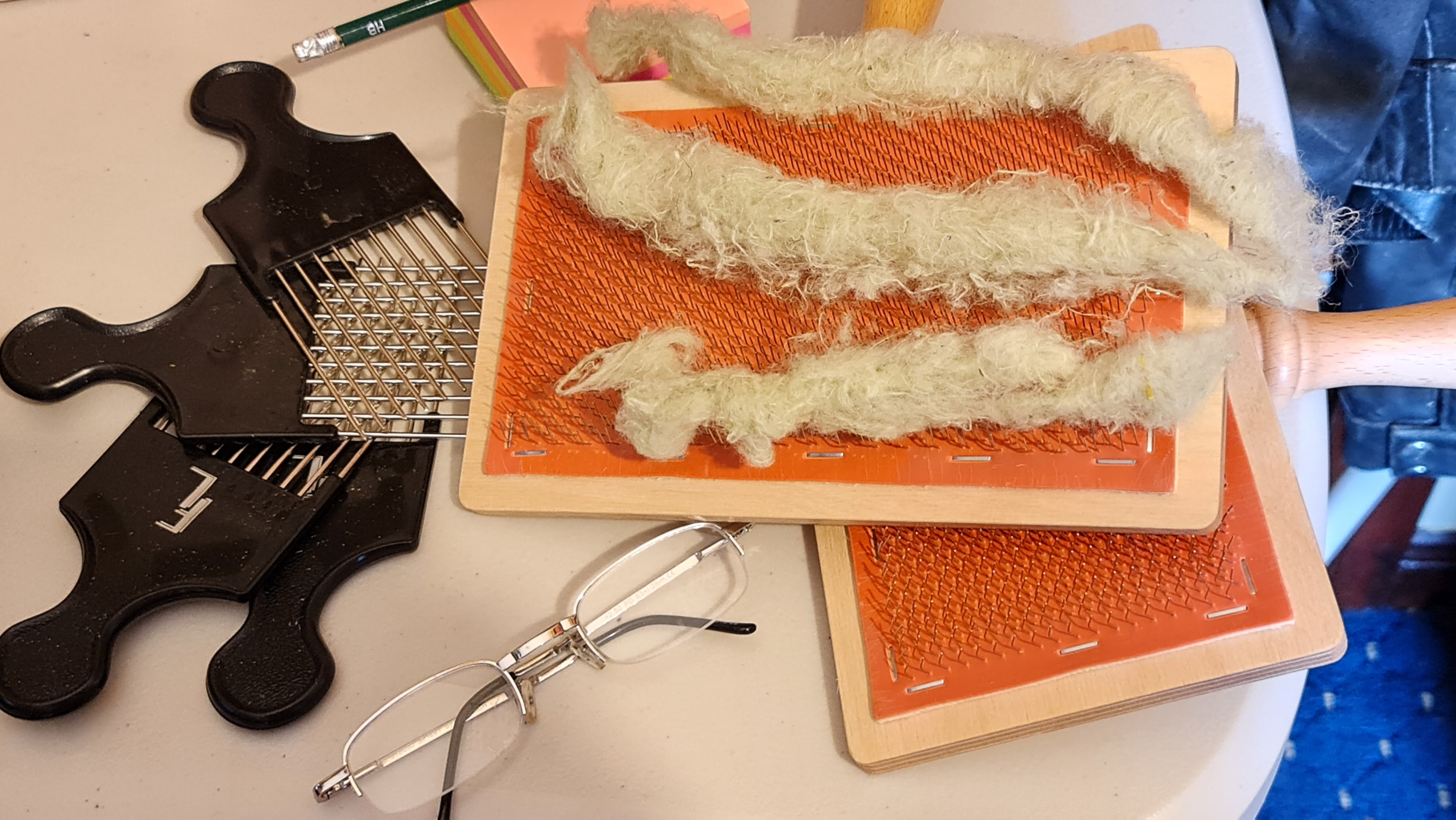
Can you guess what it is?

Does this help?

It’s nettle fibre!! Picked, de-foliated, stripped, bashed, dried, scutched, hackled, boiled in washing soda, dried again, and finally carded all by yours truly. I have been following experimental archaeologist Sally Pointer for a while now, finding out the many ways to process bast fibre (the outer ‘skin’ on the stem) from a variety of plants including nettle. This fibre is about 1/5 of the crop from about 100 dried green-stemmed nettles from the clump at the top of my garden (well, it’s really a field, just with some flowers in one part). The rest is soaking in washing soda for a week and will then be divided into combed-only and carded-only, to see if that makes a difference. I also have another 100 red-stemmed nettles from the bottom of the garden, which were processed differently – I stripped the bast off when the nettles were fresh, not dried – and are still drying. I plan to do a few other experiments this year to see what works best for my purposes.
And what are my purposes? I have become a wee bit obsessed with producing the finest possible fibre from my nettles – the kind used in expensive textiles known as ‘Nordic silk‘.
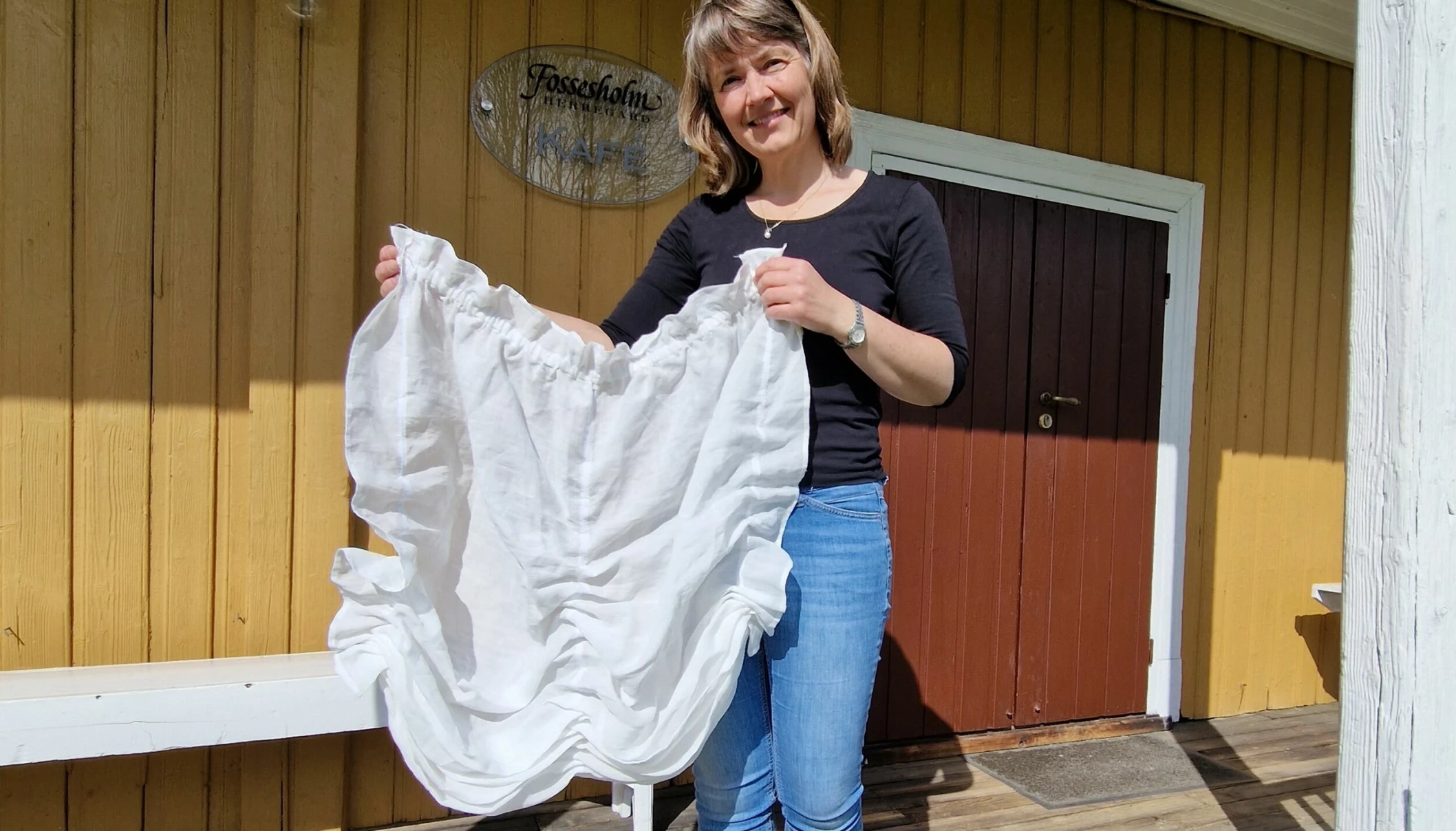

No, I’m not planning a wedding dress. But a little lace scarf would be nice.
This experiment was not very successful. The boiling was probably too harsh, breaking down most of the fibres to fluff, leaving just enough whole bast fibres to spin into a rather thick twine. Still, plenty more nettles in the garden!
FAQs
Yes, they do sting. But, like rambunctious dogs and snotty teenagers, they are best handled firmly. Grab the nettle at the base in one hand, clamp your other hand firmly on the bottom of the stem and pull the stalk through. At a pinch, you can use something to cover your hands for protection, e.g., kitchen gloves, plastic shopping bag, etc.
No, you shouldn’t make soup/tea/beer with the leaves you’ve removed. Older leaves have tummy-upsetting chemicals – but they can be added to your compost. If you wish to consume your nettles, get them early in the season, before they’ve flowered. Don’t throw away the seeds! They’re very nutritious – if you don’t eat them, leave them out on your bird table.
Nettles are best harvested for fibre after flowering and when the lowest leaves begin to turn yellow. However, useable fibre can be harvested from dead nettles that have over-wintered. Choose tall nettles with no side-shoots.
The fully-cleaned fibre is white – I was just in a bit of a rush!
 thornmaiden.com